Pistolet Bay Provincial Park, Vikings, Icebergs, and a Feathered Thief!
The sailing across the Strait of Belle Isle, back to Newfoundland, was uneventful. The weather was calm, with almost glassy seas, partly sunny but not warm, and I offloaded from the ferry and headed north to Pistolet Bay Provinical Park.
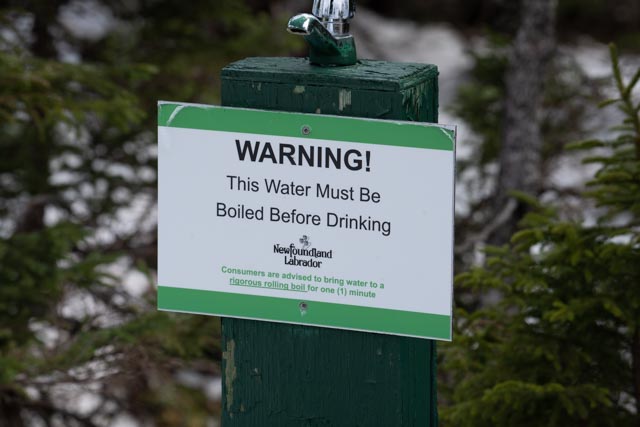
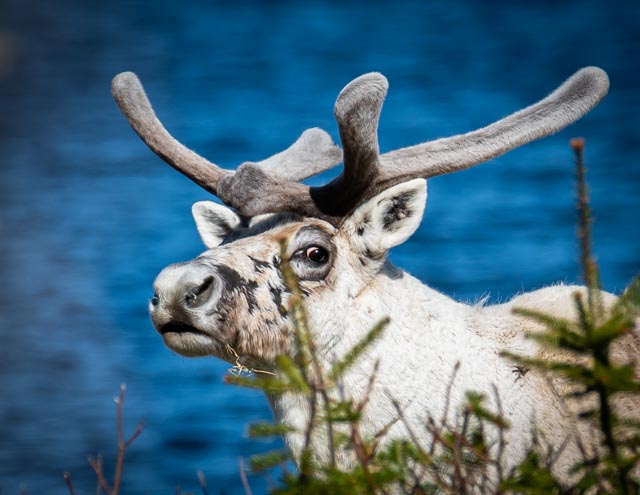
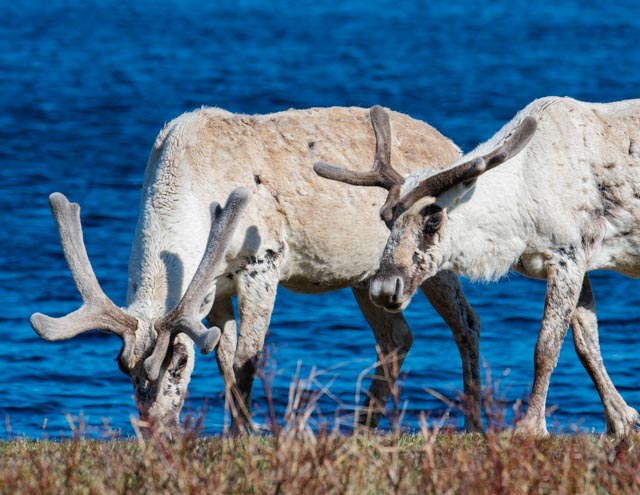
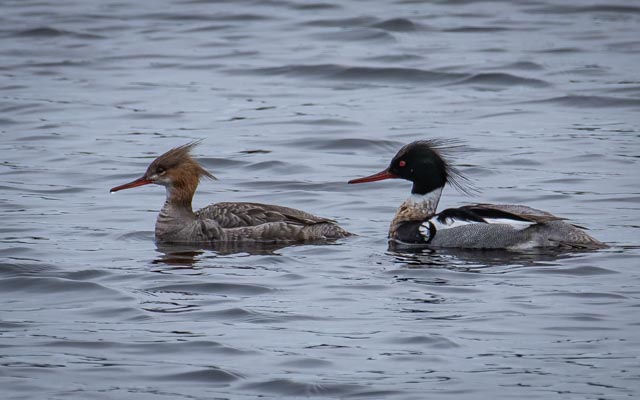
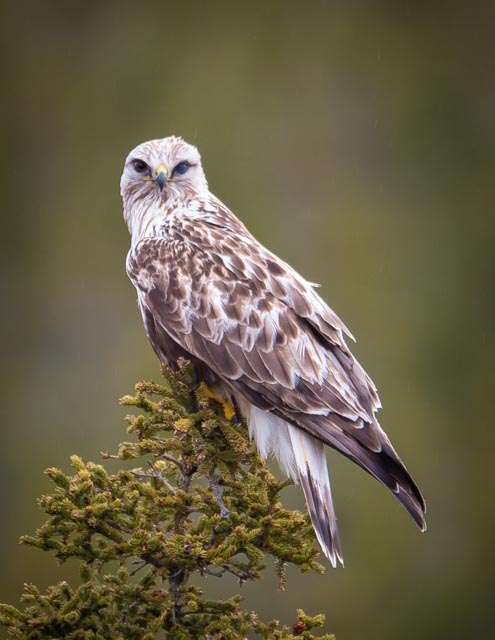
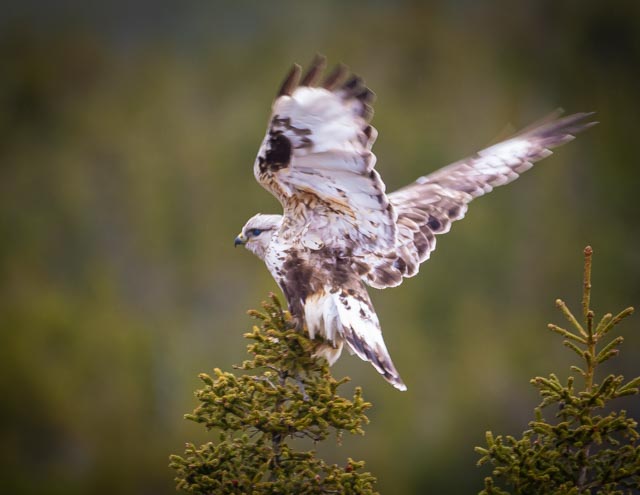
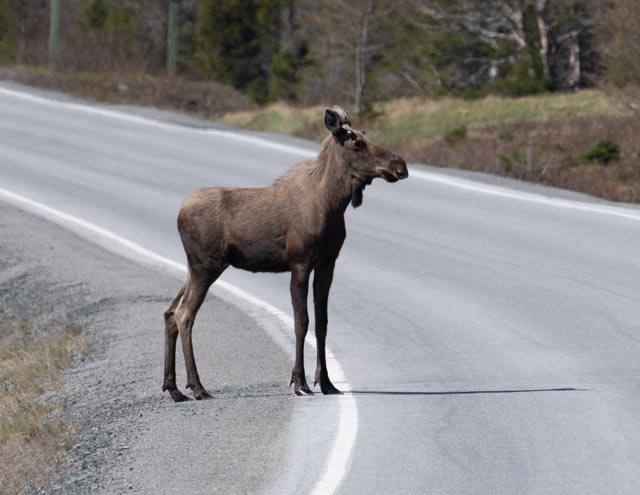
Pistolet Bay Provincial Park is well off the beaten track . . . WAY off the beaten track. There are no services provided at the camping sites (I miss electricity!), and even the water requires boiling. However, The washrooms and showers, only a short walk away, were outstanding, and the laundry was cheap compared to other places I have stayed.The Park has two “pets” as they say. Two gorgeous Caribou. This is the female. I was trying to stay down wind as they walked the beach at the park’s lake, but she still saw me. You can see that she is still in most of her winter coat, but it is changing to brown again.The younger of the two Caribou, a male, possibly the son of the older female, saw me too. I was no threat, so they kept to grazing on the grass along the edge of the lake.Caribou are not known to be aggressive, but like Moose, they are also unpredictable. Even though they are bigger than cows, and sound just like cows, they may not be as passive as cows, and I was not trusting that they would not very quickly run me down and tap dance on my spleen. Thier hooves are very large and broad to support their weight on peet bogs . . . I could imagine what they would feel like standing on me!The Park lake also had these two gorgeous visitors for an afternoon. They are Common Loons, male and female. They have some crazy head plummage!! I was hoping to see little loon chicks (never more than two) riding on their backs, but no such luck. These two stayed on the lake for the night, making thier amazing calls to each other, but by morning had moved on to better feeding or nesting grounds!This is the only raptor I have seen so far in Newfoundland or Labrador. You can see that it’s plummage is changing from winter white to the normal summer colors. I have yet to identify the species. If anyone can help, please let me know!Just a second shot of the raptor’s changing colors!Moose are everywhere in Newfoundland. Yes, they do seem to like standing on roads or next to roads, and everyone I have talked to has almost hit one, or knows someone who has hit one!!
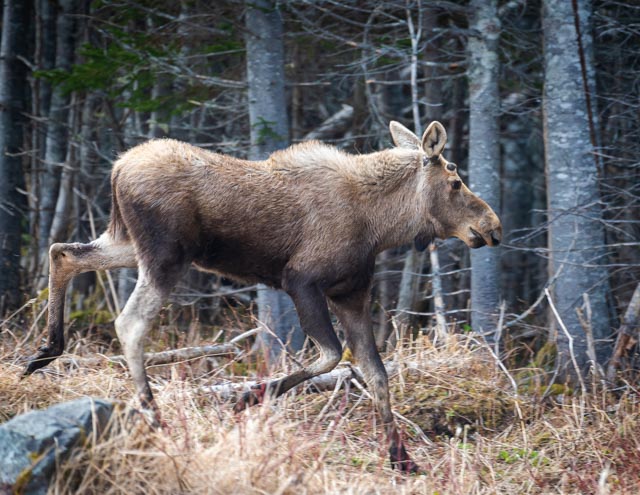
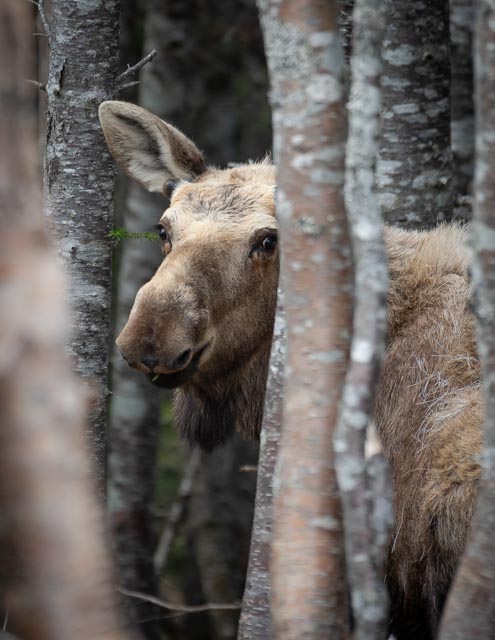
Moose Fact: Moose are not native to Newfoundland even though they seem to go hand-in-hand with the image of the province. Moose were first introduced in Newfoundland in late 1800’s( a single male and female) and again when four more where transplanted from New Brunswick to Newfoundland in 1904. The Newfoundlanders hoped that Moose would become a new source of meat for the booming mining and lumbering workforce. There are now believed to be 110,000 Moose in Newfoundland, or 3 Moose for every square kilometer.
Most of the time, when they see humans, they run away . . . . . . but they never go very far. As soon as they feel safe, they will always stop and look back to see if they are being followed.Other times, if they feel safe, hiding in clear sight, they will just go on about thier moosely business . . . . . . always keeping you under a watchful eye!!
One of the reasons I wanted to stay at Pistolet Bay, was that it was very close to L’anse aux Meadows, a UNESCO Heritage site, believed to be the oldest Viking Settlement in the New World, dating back to approximately 1,000 A.D.
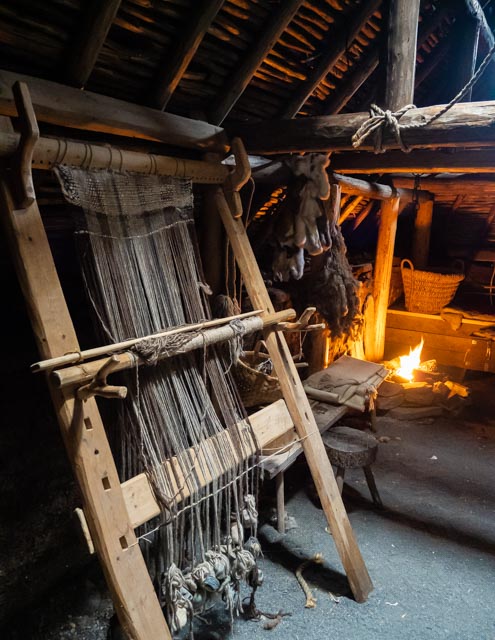
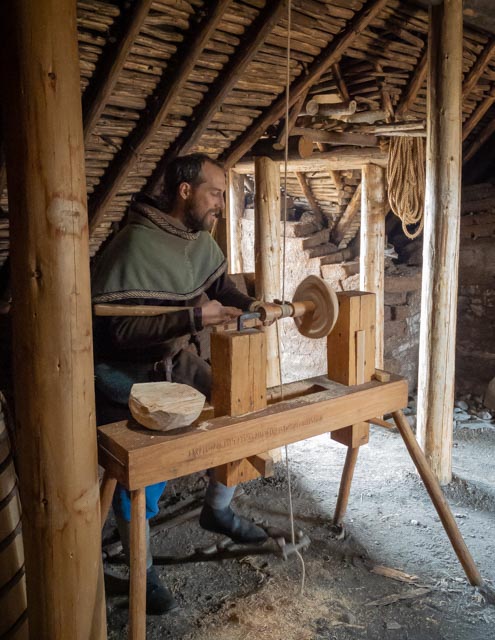
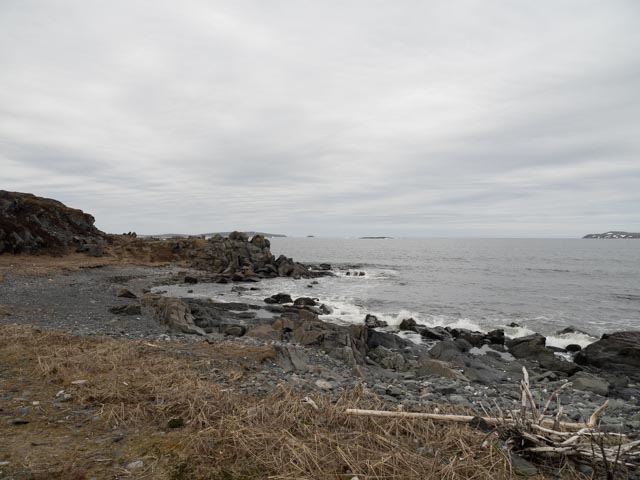
Only discovered and uncovered in the late 1900’s, the settlement of L’anse aux Meadows may actually be the “Vinland” discussed in the writing of famed Viking explorer, Leif Eiriksson. This is the sculpture on the rocks above the settlement and visitor center.Naturally, the settlement has almost completely disappeared, except for the footprints of the dwellings that had been in place. As part of the historic story telling of the Viking’s lives in the New World, using knowledge of how structures were built by Norsemen at the time, this is a reconstructed Viking dwelling. The walls are made from locally harvested peat bricks with walls six feet thick. The roof structures are made of wood that are then covered with peat and hay and allowed to grow grass to assist in keeping the structures water and element tight. They are truly creative and well engineered structures.Inside the structures, the historians have recreated many articles of daily life that would have possibly existed at the settlement. This is a loom in what would have been the women’s working area.Docents work at the site, dressed in period clothing and using tools or discussing how the vikings would have survived at the site. Here a docent is showing how a simple foot-pedal lathe is used to shape a wood bowl. It was fascinating to me to again see the creativity and ingenuity that was in place at the time.Vikings had to be very tough and very confident to sail from Greenland to what they believed would be land of plenty. This is the beach at L’anse aux Meadows, and I could not see anything that would make me say “Let’s build our new home here!!” The place, honestly, is kind of bleak. Yet, it did have good access to the ocean, is a fairly calm cove, had the perfect building material readily available, with a good source of fresh water. Maybe, in tjose times, this was all that was needed!
Curiously enough, as I was walking the beach, I saw what I initially thought were clumps of white insulating material, like the white foam used to make those cheap foam coolers sold at grocery stores in the U.S. The stuff was scatterred all over the beach, in the sand, in clumps of varying sizes. Much to my surprise, when I picked a clump up, it was not clumps of foam, but chunks of white coral. I then remembered that the beaches on the caost of Labrador, almost directly west of where I was now, have large areas of ancient coral structures along the coast and that scientists now believe these latitudes were once at the equator, in much warmer, tropical waters, at some time in our planet’s past.
This is a picture of the beach and peet bog only a short hike from the settlement. Walking on peet I found to be very interesting. At one moment you can be walking across , what you believe to be solid and then with your next stepp be sinking to your knees in a material that will try to suck your boots off when you extract you feet. Yet again, the bogs support a wide variety of berries in the spring and fall, food stuffs that can be stored for long periods to feed many hungry mouths.
L’anse aux Meadows was very well worth the journey. It has brought back to mind those stories my elementary teachers told of the exploration of the New World. (Yes . . . I was periodically paying attention!) If, in fact, the settlement at L’anse aux Meadows is the “Vinland” discovered by Lief Erickson, it shows that europeans may have set foot on continental America 500 years before Christopher Columbus. I really need to read more about Leif Eiricksson!!
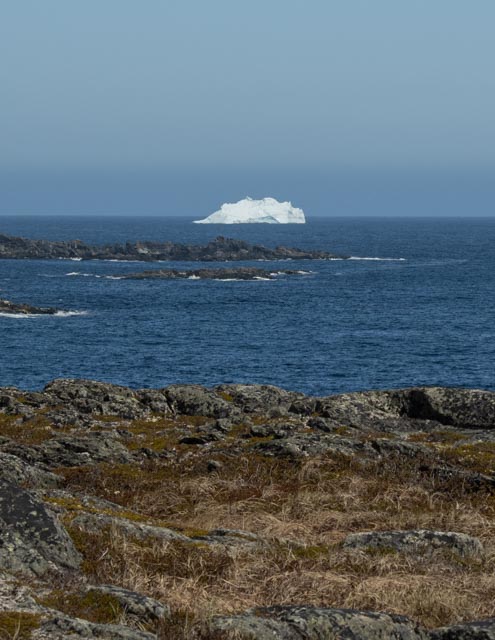
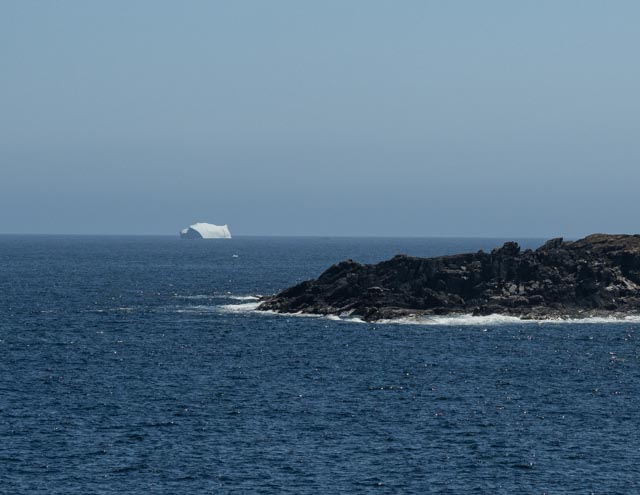
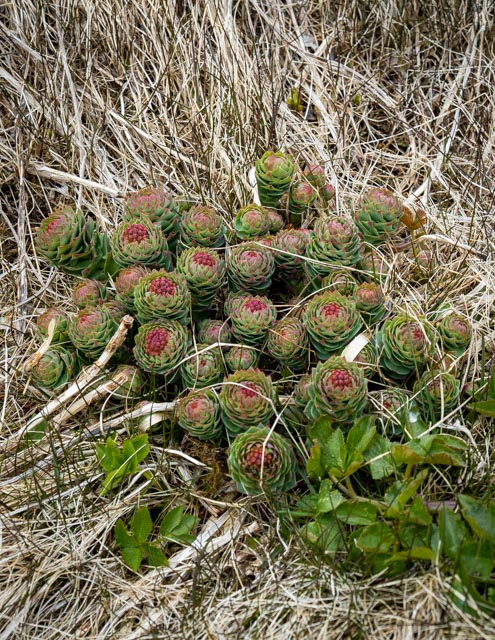
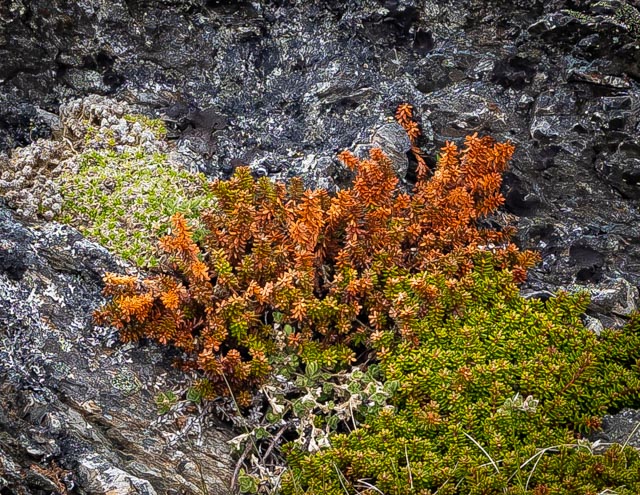
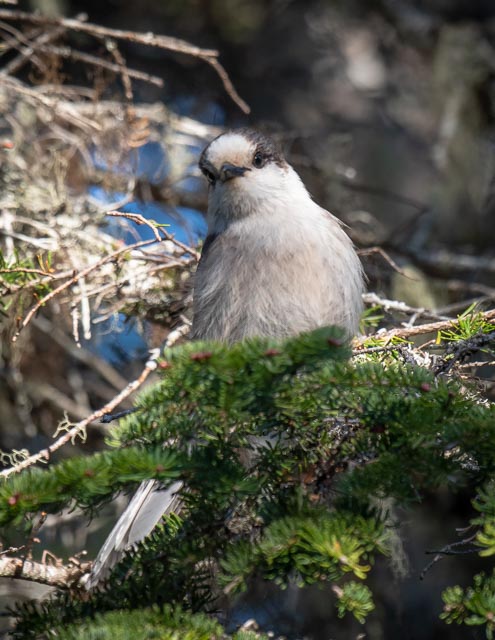
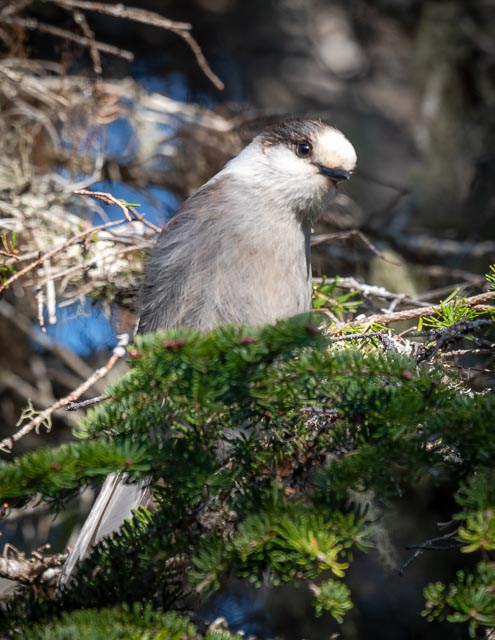
My first Iceberg!! I initially saw this berg from the Lighthouse a St. Anthony. It was north of the cove, almost on the horizon. With my height of eye, I estimated that would put it about 18 miles up the coast. So I drove first to St. Anthony Bight, a tiny little set of coves north of St. Anthony. Next I road up and out to St Carols, another small fishing village . . . but I was still to far south. Finally, at Great Brehat, up on the cliffs over the town of seven buildings, I finally saw this chunk of ice on the horizon. I watched this berg for over an hour and with the wind pushing it into the shore, it never moved, so I believe the ice below the water is probably already pushing against the rocky shelf that sists off the coast.Except . . . this was actually the berg I was hunting . . . so . . . two bergs in one day, only separated by about six miles of water. This berg is in open waters and is drifting south, directly towards Twillingate, where I will be tomorrow!!As you know, I am always on the lookout for new plants. This succulent is growing all along the rocky western coasts. It seems to do very well in the shallow soil, wedged into the cracks of the rocks. It is called “Roseroot”.The other common plant that you find clinging everywhere to the rocks, with gorgeous green and orange colors, crunching under foot, is this plant known as “Black Crowberry”.Lasst but not least, this was my camp nemesis. Quiet, never making a sound, he would snatch anything off the picnic table that he thought he could get away with! Be it breakfast, luch or dinner, this bird was suddenly above me, jumping from branch to branch, waiting for an open oppurtunity to hop down, grab and snatch!! LOLThis is a “Canadian Jay” and are very common throughout Newfoundland, Labrador, Nova Scotia and New Brunswick. This bird was the first one of its species that I hade met. He is also known as the “Grey Jay” and the “Brazen Jay”. I was told by the Park Ranger that I could probably hold out my hand with a cracker in it, and he would come and take it out of my hand!Regardless of the theivery that it conducted (I had spare crackers!) I did enjoy the looks it would give me when I whistled at it. A very inquisitive, and wonderful bird!More to come tomorrow, but I need to get some sleep. The weather is going back to grey and rain . . . tomorrow . . . Dildo Run Provincial Park!!









 What the Walrus said . . .
One response to “Pistolet Bay Provincial Park, Vikings, Icebergs, and a Feathered Thief!”
Matt, I am enjoying your posts and pictures so much! Thank you
Safe travels my friend!
Ginger
Sent from my iPad
LikeLike